You have enough to worry about without confusing cookie policies. We use them to make sure you get the caregiver support and resources that actually help.
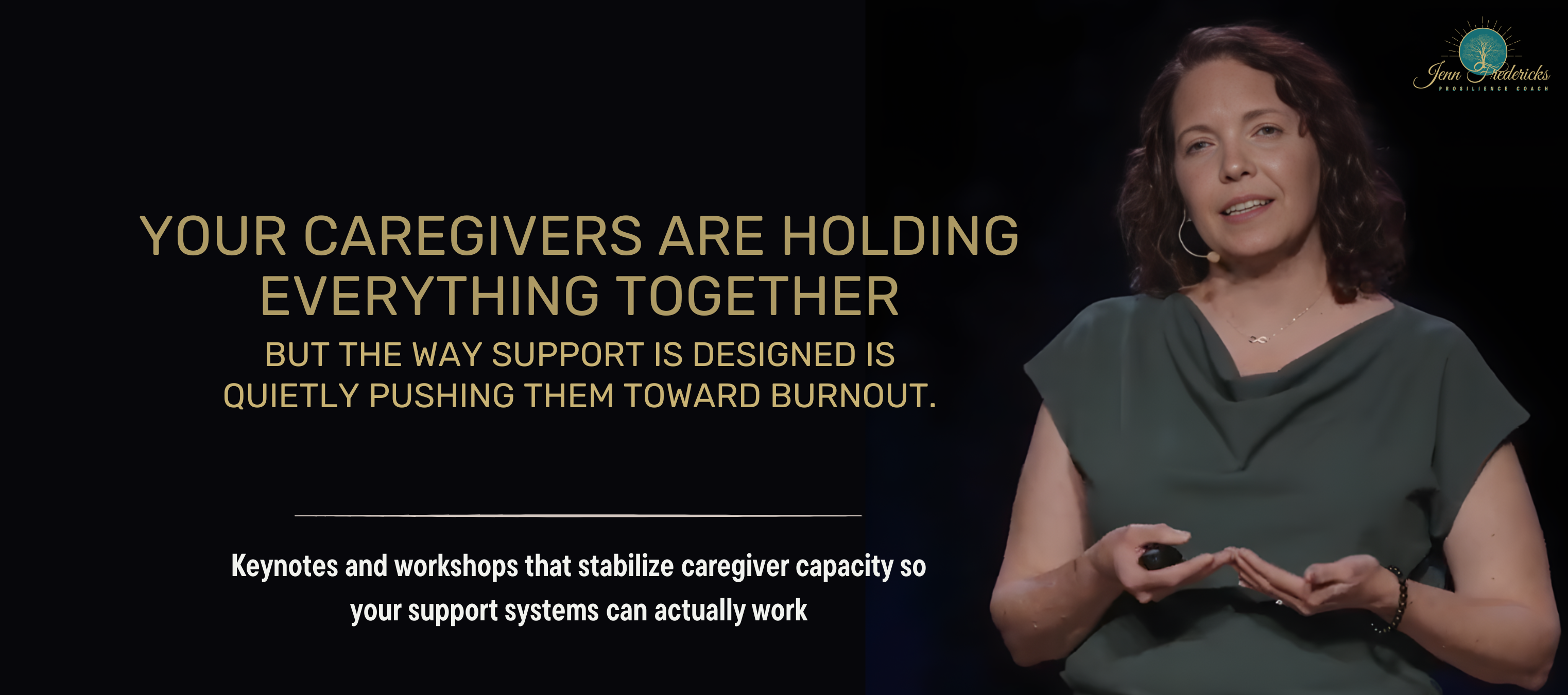
Your caregivers are doing everything asked of them. But when capacity is depleted, even the right support becomes difficult to use.
- Missed or misunderstood care instructions
-
Inconsistent follow-through at home
-
Increased reliance on crisis intervention
- Caregivers quietly stepping back when it becomes too much
When caregiver capacity is strained, the impact extends beyond the caregiver.
We see this reflected in what caregivers experience over time:
- An estimated 23% of caregivers report that their health has worsened as a result of caregiving
- Exhausted caregivers make more medication errors and miss critical care instructions
- Organizations spend more resources on crisis intervention instead of prevention
What often goes unaddressed is this:
Caregivers don’t need more support.
They need support that meets them where they are, not where we hope they’ll be.
When capacity isn’t accounted for, even well-designed support becomes difficult to sustain.

Support only works when there’s capacity to use it.
My work starts there.
Signature Keynote
"Caregiving Without Collapse: How to Shift from Survival Mode to Sustainable Energy"
Caregivers are expected to hold everything together while managing ongoing uncertainty, complex care, and their own lives. This keynote addresses the gap between what caregivers are expected to do and what they actually have capacity for.
What makes this keynote different:
- Focuses on what caregivers can sustain, not what they’re told to add
- Centers real-life capacity, not ideal conditions
- Delivered by someone who has lived both sides of car
What caregivers leave with:
- Practical ways to reset in real moments, not ideal ones
- A clearer understanding of what actually supports them
- Permission to care for themselves without stepping out of care
- A way to stay engaged without becoming depleted
When caregivers can sustain themselves, care becomes more consistent and support is more likely to be used.
Where this work is most effective:
- Health systems and hospital programs
- When caregiver follow-through and consistency directly impact care outcomes
- Nonprofit and caregiver conferences
- When you want to offer something that goes beyond inspiration and actually sustains people after the event
- Foundations and community initiatives
- When caregiver support is a priority, but engagement has been difficult to maintain
- Employee and workforce settings
- When staff are balancing work and caregiving and need support that fits real life
WORKSHOP & BREAKOUT OPTIONS:
"Caregiver Energy Reset"
Simple, practical ways to sustain energy in the middle of ongoing care
- Identify where energy is being lost
- Apply short resets that work in real time
- Build awareness of what actually restores capacity
"Building Prosilience in Caregivers"
Strengthening resilience without adding more to manage
- Shift from reactive coping to proactive stability
- Build resilience before crisis points
- Create systems that hold under pressure
"All the Women in Me are Tired"
Specialized session for the sandwich generation
- Navigate layered responsibilities without collapse
- Set boundaries that are sustainable
- Build support that actually supports
FOR THE PROFESSIONALS WHO HOLD THIS WORK EVERY DAY:
Sustaining care isn’t just a caregiver challenge. It’s also what professionals and support teams are navigating every day.
"Sustaining Your Service: Managing Your Energy in Heart-Based Work"
Managing energy and capacity in heart-based work
This session focuses on the internal demands of supporting others over time. It helps professionals:
- Recognize where their energy is being depleted
- Stabilize their own capacity
- Continue showing up without burning out or disconnecting
Participants leave with:
- A clearer understanding of their own capacity patterns
- Practical ways to reset during the workday
- Tools to stay present without becoming overwhelmed
- A more sustainable way to continue their work
Trusted by organizations including:









If your caregivers are already stretched thin, waiting makes this harder to reverse.
Let’s talk about what this could look like in your system.
Thank you for getting in touch!
One of our colleagues will get back to you shortly.
Have a great day!